A Tanzania safari offers photographers a constantly changing subject. Wildlife may appear in open grassland, shaded woodland, river channels or dust-filled tracks, and the vehicle rarely stops on perfectly level ground. The best photographs often come from being ready, understanding the light and accepting that animals do not follow a schedule. A useful camera kit is one that can be handled quickly, protected from dust and used comfortably through a full day in the field.
A photography-focused safari is not simply a standard itinerary with a longer lens. It benefits from realistic drive times, room for waiting, a guide who understands photographic positioning and a vehicle arrangement that suits the number of people carrying equipment. Tanzania Beauty Safaris can help plan those details while keeping wildlife welfare and park regulations at the centre of the experience.
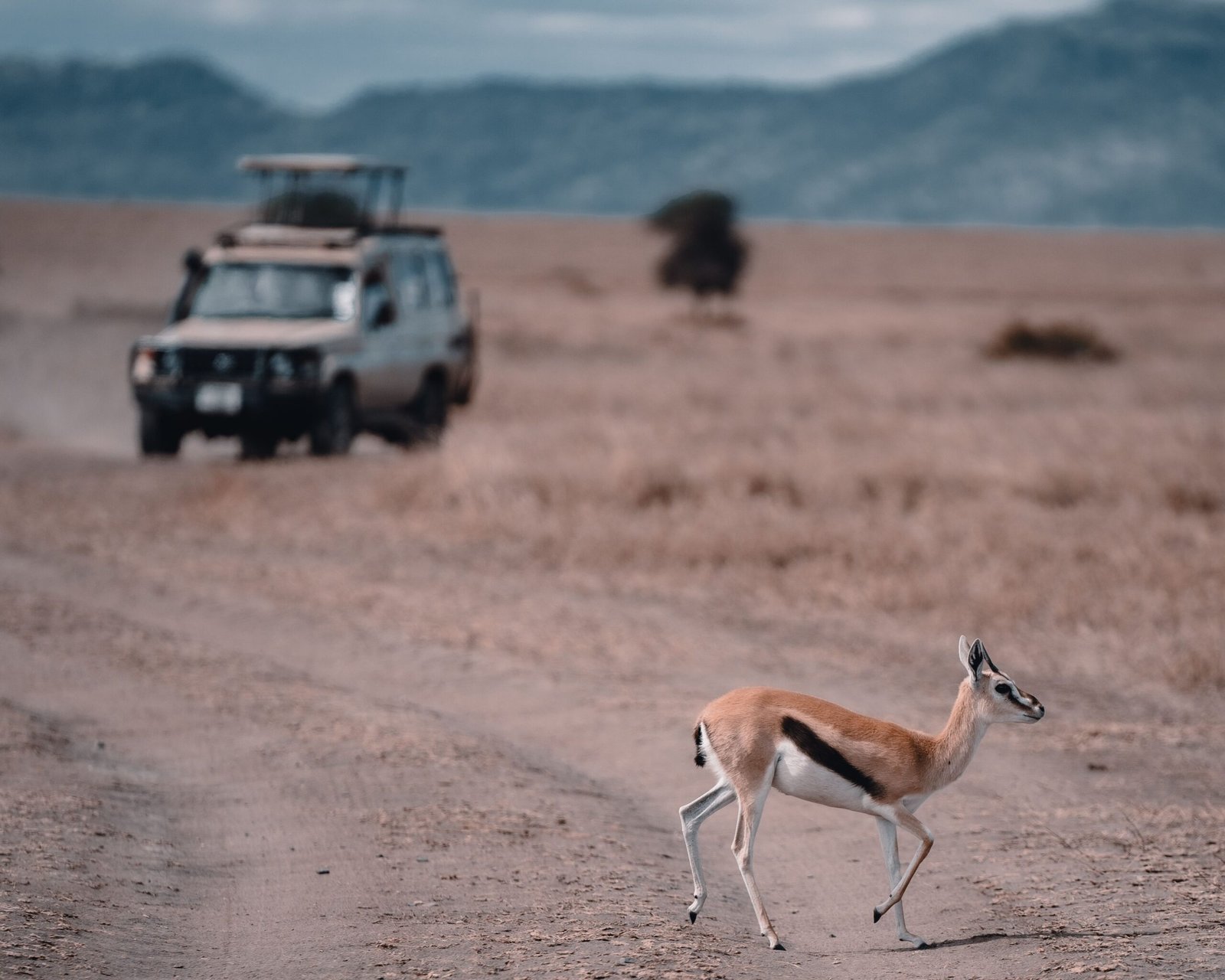
Choosing camera equipment for a moving safari vehicle
The most useful camera equipment is the kit you can operate without hesitation. A telephoto zoom gives flexibility when animals are at a distance, while a shorter zoom is valuable for landscapes, elephants close to the vehicle and scenes that include the surrounding habitat. A single camera body with a dependable zoom can be more practical than changing lenses repeatedly in a dusty vehicle. Travellers who use two bodies may keep one fitted with a long lens and the other with a wider lens, reducing the need to swap equipment while wildlife is moving. The right focal length depends on the subject, the vehicle’s position and the photographer’s experience, not on a single recommended number.
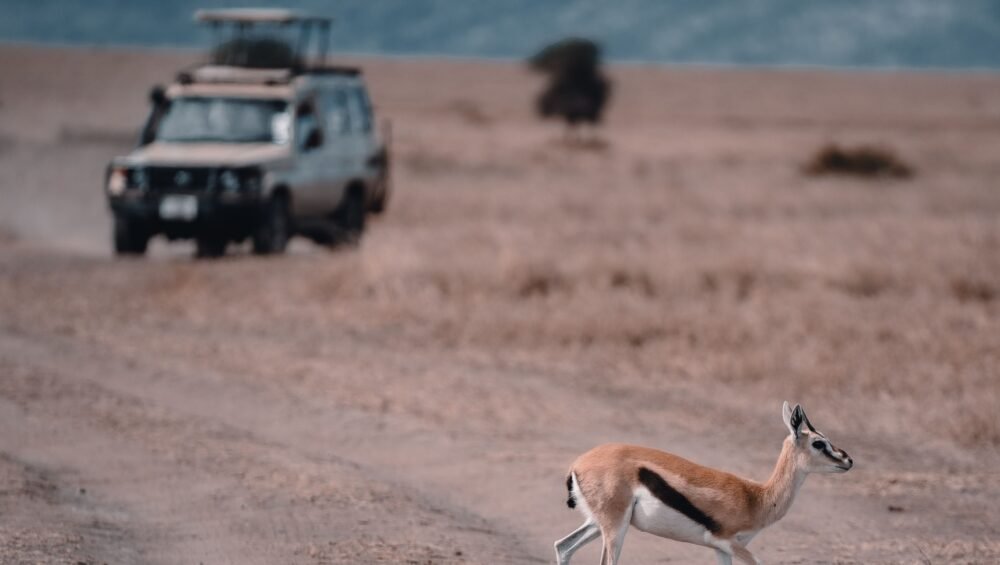
Support is important because safari vehicles move and may not provide a stable surface. A beanbag placed on the window frame or vehicle rail can help steady a long lens, while a monopod may be useful in some vehicle layouts if the operator allows it. A full tripod is often awkward inside a vehicle and can obstruct other guests. Before travelling, ask whether the vehicle has open sides, sliding windows, roof hatches or enough room for camera bags. If you are sharing a vehicle, clarify how much space is available and whether every passenger will have access to a suitable shooting position. A private vehicle offers more flexibility, but it still needs sensible equipment storage and a guide who can position it safely.
Dust protection deserves as much attention as lenses. Fine dust can enter bags and settle on sensors, filters and focusing rings. Use a camera bag that closes securely, keep spare lenses capped and avoid changing lenses while the vehicle is moving or in a dusty convoy. A blower, microfibre cloths, spare batteries, memory cards and a simple dry bag can prevent small problems from interrupting a day. Back up images regularly, ideally to two separate storage devices, and keep batteries charged at camp. On longer safaris, charging options can vary between lodges and mobile camps, so check the power arrangements before departure. A compact, organised kit is easier to use than an oversized collection of equipment that stays packed away.
Working with light, dust and changing wildlife behaviour
Light changes quickly on the savanna. Early morning can bring cool tones and long shadows, while the sun becomes stronger and more contrasty as the day progresses. Late afternoon often gives softer light, but dust in the air can affect contrast and colour. Photographers should learn to adjust exposure as conditions change rather than relying on one setting for every subject. A dark animal against pale grass may need different exposure from a white bird in bright sunlight. Continuous autofocus and a fast shutter can help with moving wildlife, but the appropriate settings depend on the lens, camera and distance. It is better to practise before the trip than to spend the first game drive learning basic controls.
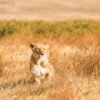
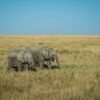
The environment also influences the kind of image that is possible. A lion in open shade may be easier to photograph than one in tall grass, while an elephant walking through dust may create a strong atmospheric frame but make fine detail harder to capture. Heat shimmer can distort distant subjects, especially later in the day, so a closer opportunity may produce a clearer result than a long lens at maximum reach. Rain and overcast skies can be useful for even light and richer colours, but they may also reduce visibility. A guide who knows the area can help anticipate where animals may move, although no one can control the behaviour of wild animals or guarantee a particular scene.
Good wildlife photography often depends on patience and restraint. Stay with the vehicle and follow the guide’s instructions when positioning for a photograph. Do not ask the driver to block an animal’s path, move too close or leave a designated track. Avoid shouting, clapping or making sounds to attract an animal’s attention. If several vehicles are gathered around a sighting, consider waiting or moving away rather than adding pressure. The best position is not always the closest one; an angle that leaves space around an animal can produce a stronger photograph and a less intrusive encounter. A photography safari should improve the time available for observation, not encourage behaviour that changes the animal’s natural response.
Photographing responsibly and planning a photography-focused safari
Before the trip, discuss the type of photography that matters most. A traveller interested in birds may need longer stops and a guide who can identify calls, while a landscape photographer may prefer a route that includes viewpoints, open plains and time around sunrise or sunset. A family sharing a vehicle may want a balanced programme rather than long waits at every sighting. If photography is the main purpose, a private vehicle can make it easier to adjust the pace and position, but the itinerary should still respect park rules and the guide’s judgement. Ask about the number of passengers, seating, roof access, charging points, dust protection and whether a beanbag can be used safely.
Photographing people requires consent. This applies in villages, markets, cultural visits and roadside encounters. Ask before making a portrait and explain if the image may be used commercially or published online. Consent to a photograph does not automatically mean consent to a video, a social-media post or advertising use. In community visits, follow the local guide’s instructions and accept a refusal without argument. A respectful approach protects the dignity of the people being photographed and helps keep cultural visits based on mutual understanding rather than on the visitor’s image collection.
Drones need particular attention. Tanzania’s Civil Aviation Authority states that non-residents bringing drones must arrange an import permit, register the drone and operator, and obtain an operations permit; its published procedure says applications should be made at least three weeks before arrival. National parks may also require additional authority approval, and a general aviation permit should not be treated as permission to fly anywhere. Travellers should check current rules with the TCAA and the relevant park authority before packing a drone. For most safari photographers, a well-planned ground-based kit is the reliable option. Tanzania Beauty Safaris can help organise vehicle space, camp charging and a realistic photography route, while any special filming or drone activity must be arranged separately and approved by the relevant authorities.
The strongest Tanzania safari photographs come from preparation, patience and respect for the wildlife and people in front of the lens. Choose equipment you can handle in a moving vehicle, plan enough time for observation and check all special permissions before travel. Contact Tanzania Beauty Safaris if you would like a private itinerary designed around wildlife photography.
Planning a photography-focused safari itinerary
The route and length of a photography safari can matter as much as the camera itself. Wildlife photography often involves waiting for light, animal behaviour or a clear background, so a schedule with several long transfers may leave too little time in the field. Consider staying multiple nights in a region rather than changing camps every day. In the Serengeti, the best base depends on the month and the wildlife interest: central areas offer varied resident wildlife, while northern or southern locations may be more relevant to seasonal migration. A knowledgeable guide can adapt the day’s route, but the itinerary should allow enough time to respond when an interesting sighting develops.
Vehicle arrangements should be discussed before confirming the booking. Ask whether the safari is private, how many passengers share the vehicle, whether window and roof access are available and whether there is room for camera bags and support equipment. A private vehicle gives greater control over positioning and time at sightings, although the guide must still follow park rules and keep a respectful distance from wildlife. If travelling with other photographers, agree on expectations about stops, lens changes and sharing viewing positions. A beanbag or compact support can be useful, but large tripods may be impractical in a moving safari vehicle and should be discussed with the operator.
For destination planning alongside photography, explore our guide to choosing a Serengeti region and the Serengeti migration guide.
Think about the type of images you want before selecting accommodation. A camp close to open plains may suit wide wildlife scenes and sunrise photography, while a riverine location can provide opportunities for birds and animals coming to water. These are possibilities, not guarantees, and animal activity changes with season and weather. Ask about the camp’s location relative to the areas you hope to photograph, the likely drive time and whether early departures are possible. It is also worth checking charging access, battery arrangements and whether power is available throughout the day. A practical itinerary protects time for photography while leaving room to enjoy the wider safari rather than turning every sighting into a technical exercise.