Ndutu Calving Season in Tanzania: Best Time to Visit, Wildlife & Safari Guide
The Ndutu Calving Season is one of the most spectacular wildlife experiences in Tanzania, offering visitors an extraordinary opportunity to witness the Great Wildebeest Migration during the birth of hundreds of thousands of wildebeest calves. Every year, vast herds gather across the short-grass plains of Ndutu in the southern Serengeti ecosystem, creating one of Africa’s most remarkable natural events.
Between January and March, the landscape transforms into a wildlife paradise. Newborn wildebeest take their first steps, thousands of zebras and gazelles move across the open plains, and predators such as lions, cheetahs and hyenas follow the migrating herds in search of food.
For travellers planning a Tanzania safari, the Ndutu Calving Season offers a unique combination of dramatic wildlife encounters, beautiful green landscapes and exceptional photography opportunities.
At Tanzania Beauty Safaris, we organise memorable Ndutu Calving Season safaris, giving travellers the opportunity to explore the migration plains with experienced local safari guides who understand the seasonal movements of wildlife.
Whether you are a wildlife photographer, a first-time safari visitor or an experienced African traveller, Ndutu is a destination worth experiencing.
What Is the Ndutu Calving Season?
The Ndutu Calving Season is the period when large numbers of wildebeest gather in the southern Serengeti ecosystem to give birth to their young. It forms an important stage of the Great Wildebeest Migration, one of the world’s most famous wildlife movements.
Ndutu is located between the southern Serengeti and the Ngorongoro Conservation Area in northern Tanzania. Its open grasslands, seasonal water sources and nutrient-rich short-grass plains provide ideal conditions for wildebeest to give birth and raise their calves.
During this period, approximately 1.5 million wildebeest participate in the wider Great Migration, accompanied by large numbers of zebras and gazelles. Hundreds of thousands of wildebeest calves are born during the calving period.
The abundance of newborn animals also attracts predators. Lions, cheetahs, leopards, spotted hyenas and jackals are frequently encountered around the migration herds.
Unlike the dramatic river crossings of the northern Serengeti, the Ndutu Calving Season is particularly famous for witnessing births, newborn wildlife and intense predator-prey interactions across open grasslands.
When Is the Ndutu Calving Season?
The Ndutu Calving Season generally takes place between January and March, although the exact timing and location of the migration herds depend on rainfall and seasonal grazing conditions.
February is usually considered the peak month for wildebeest births, making it one of the best times to plan a Ndutu safari.
December: Arrival of the Migration Herds
December marks the beginning of the migration season in the southern Serengeti and Ndutu region. As seasonal rains replenish the grasslands, large herds of wildebeest and zebras gradually move into the area.
The plains become increasingly green, attracting migrating wildlife from different parts of the Serengeti ecosystem.
Although calving activity may already be taking place, the number of newborn calves generally increases as January approaches.
December is a wonderful time to enjoy beautiful scenery, large wildlife herds and fewer crowds in some areas.
January: Beginning of the Calving Season
January is an exciting month in Ndutu as wildebeest calving activity becomes more widespread.
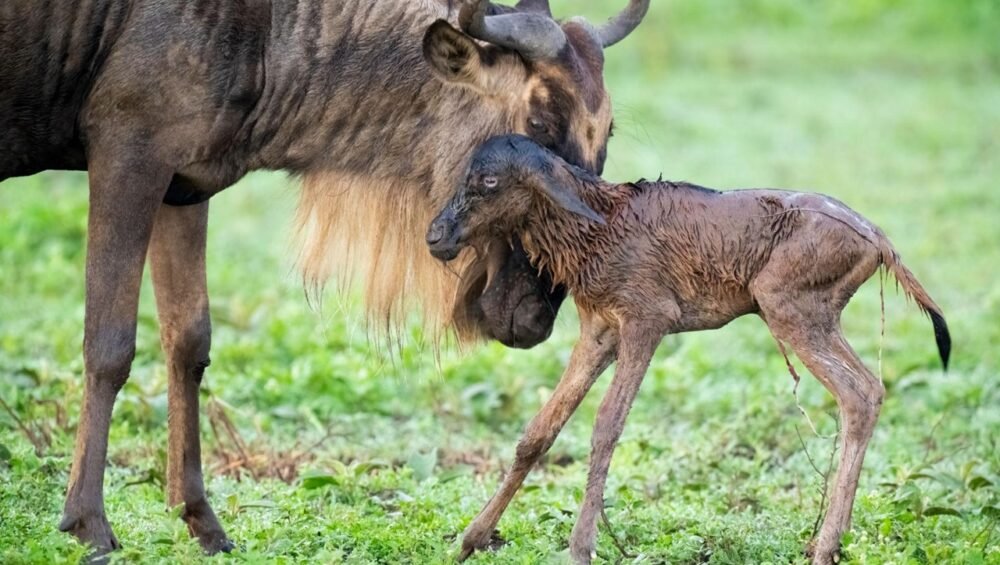
Large herds gather across the short-grass plains, and visitors may begin witnessing newborn calves taking their first steps shortly after birth.
The surrounding grasslands provide excellent grazing conditions, allowing mother wildebeest to feed while protecting their young.
Predators also become more active around the migration herds, creating opportunities to observe natural wildlife behaviour.
January is an excellent month for travellers who want to experience the migration before the peak February period.
February: Peak Ndutu Calving Season
February is generally the highlight of the Ndutu Calving Season.
During this month, enormous numbers of wildebeest give birth across the southern Serengeti plains. The sight of newborn calves moving alongside their mothers is one of the most memorable experiences of a Tanzania safari.
The abundance of young wildebeest attracts predators, making February particularly rewarding for wildlife photographers and visitors interested in predator behaviour.
Cheetahs can often be seen scanning the open plains, lions patrol around the herds, and spotted hyenas search for opportunities.
For travellers hoping to witness the Great Migration at its most dramatic, February is one of the best months to visit Ndutu.
March: Late Calving and Migration Movement
March often brings the final stages of the main calving period, although births may continue depending on seasonal conditions.
Many wildebeest calves are now stronger and more mobile, moving with their mothers across the grasslands.
As rainfall patterns and grazing conditions change, migration herds gradually begin shifting towards other parts of the Serengeti ecosystem.
March remains a rewarding month for wildlife viewing, with opportunities to encounter large herds, predators and beautiful green landscapes.
Why Visit Ndutu During the Calving Season?
The Ndutu Calving Season offers a different experience from other stages of the Great Migration. Instead of focusing mainly on river crossings, visitors experience the beginning of new life and the dramatic interactions between wildlife and predators.
Here are some of the main reasons to visit.
Witness Thousands of Newborn Wildebeest
One of the greatest attractions of Ndutu is the opportunity to see newborn wildebeest in their natural environment.
A newborn calf can stand and begin walking within minutes of birth. This remarkable adaptation helps young wildebeest keep up with their mothers and reduces their vulnerability to predators.
During the peak calving period, visitors may encounter calves resting beside their mothers, nursing in the grass or running across the open plains.
These encounters provide a rare opportunity to observe the early stages of life in one of Africa’s largest wildlife migrations.
Experience Large Migration Herds
The sight of thousands of wildebeest moving across the Ndutu plains is unforgettable.
The migrating animals create an impressive landscape of moving wildlife, often accompanied by zebras and Thomson’s gazelles.
The herds gather around areas with fresh grass and water, creating excellent opportunities for game drives and wildlife photography.
Exceptional Predator Viewing
The abundance of newborn wildebeest attracts many predators to the Ndutu region.
Lions, cheetahs, hyenas and jackals take advantage of the seasonal concentration of prey.
Visitors may witness hunting attempts, territorial behaviour, interactions between predators and scavenging activity.
Although wildlife encounters are never guaranteed, the calving season provides some of the most exciting predator-viewing opportunities in Tanzania.
Beautiful Green Landscapes
Seasonal rains transform Ndutu into a beautiful green wilderness.
The open grasslands, scattered acacia trees, seasonal lakes and dramatic skies provide wonderful scenery for photography.
Compared with the dry-season landscapes of other parts of Tanzania, the calving season offers a particularly colourful and vibrant safari experience.
Wildlife to See During the Ndutu Calving Season
Ndutu is home to an impressive variety of wildlife throughout the year. However, the calving season creates particularly rewarding conditions for observing large herbivores and their predators.
Wildebeest and Newborn Calves
Wildebeest are the main attraction during the calving season. Large herds gather across the plains, giving birth and raising their young.
Visitors can observe mothers caring for newborn calves, herds moving across the grasslands and young animals learning to follow the migration.
Zebras and Thomson’s Gazelles
Zebras and Thomson’s gazelles accompany the wildebeest migration, adding to the diversity of wildlife across the plains.
Zebras are easily recognised by their distinctive black-and-white stripes, while Thomson’s gazelles are commonly seen grazing in open grassland areas.
Both species are important parts of the Serengeti ecosystem.
Lions
Lions are among the most frequently encountered predators during the Ndutu Calving Season.
They can often be seen resting under trees, patrolling the grasslands or observing the movement of wildebeest herds.
The concentration of prey makes the region particularly attractive to lion prides.
Cheetahs
Ndutu’s open plains provide excellent habitats for cheetahs.
These fast-running predators rely on open grasslands to locate and pursue their prey. During the calving season, visitors may see cheetahs scanning the plains, moving between herds or attempting to hunt.
Spotted Hyenas
Spotted hyenas are highly active around the migration herds.
They are skilled hunters and scavengers, frequently moving across the plains in search of food.
Their social behaviour and interactions around the herds make them fascinating animals to observe.
Leopards and Jackals
Although less predictable to encounter, leopards and jackals also inhabit the Ndutu ecosystem.
Leopards are usually associated with areas containing trees and suitable cover, while jackals can often be seen around the grasslands searching for small prey and other food sources.
Predator Viewing During the Great Migration
One of the most exciting aspects of visiting Ndutu during the calving season is the concentration of predators around the migrating herds.
The abundance of newborn wildebeest creates opportunities to observe the natural relationship between predators and prey.
Lion Hunting During Calving Season
Lions are powerful predators that frequently patrol areas where wildebeest gather.
During game drives, visitors may encounter lion prides resting in the grass, moving through herds or preparing for hunting opportunities.
Watching lions interact with their surroundings provides insight into their behaviour and survival strategies.
Cheetah Hunting on the Open Plains
Cheetahs are particularly fascinating to observe in Ndutu because of the area’s open grasslands.
They often use raised ground, termite mounds and other vantage points to scan for potential prey.
A hunting attempt can develop quickly, making cheetah sightings especially exciting for wildlife photographers.
Hyenas Following the Migration Herds
Spotted hyenas are highly adaptable predators that benefit from the seasonal abundance of wildebeest.
They often move around the herds, hunt independently or in groups and compete with other predators for food.
Their distinctive calls and social interactions add another dimension to the Ndutu safari experience.
The Natural Balance of the Ecosystem
The relationship between wildebeest and predators is an essential part of the Serengeti ecosystem.
While predators depend on herbivores for food, the migration herds also benefit from the seasonal availability of fresh grazing.
Observing these interactions helps visitors understand why the Great Migration is one of the most important wildlife events in Africa.
Best Places to Experience the Ndutu Calving Season
The Ndutu region offers several excellent wildlife-viewing areas, each providing different opportunities for game drives.
Ndutu Plains
The Ndutu Plains are among the most popular locations during the calving season.
Their open grasslands provide ideal conditions for wildebeest to give birth, while the surrounding landscape supports a variety of predators.
These plains are particularly rewarding for visitors hoping to photograph newborn calves and large migration herds.
Lake Ndutu
Lake Ndutu is a seasonal alkaline lake surrounded by grasslands and woodland habitats.
The area attracts different bird species and other wildlife, making it an interesting location for game drives.
Depending on water levels and seasonal conditions, visitors may encounter flamingos and other waterbirds.
Lake Masek
Lake Masek is another important area within the Ndutu ecosystem.
Its surrounding grasslands and woodland habitats attract wildlife throughout the migration season.
The area offers excellent opportunities to explore different landscapes and search for predators and herbivores.
Hidden Valley
Hidden Valley is a well-known wildlife-viewing area in the Ndutu region.
Its grasslands and surrounding vegetation attract herbivores and predators, making it an interesting location to explore during morning and afternoon game drives.
Your safari guide will select the most promising locations depending on recent wildlife movements and road conditions.
Where to Stay During the Ndutu Calving Season
Choosing the right accommodation is an important part of planning a successful Ndutu safari.
During the migration season, staying close to the wildlife-viewing areas allows visitors to spend more time exploring the plains rather than travelling long distances between accommodation and game-drive locations.
Several seasonal tented camps operate in and around Ndutu, offering comfortable accommodation in the heart of the migration ecosystem.
Depending on your budget and preferences, you can choose from:
- Luxury tented camps: Offering spacious safari tents, private bathrooms, excellent dining and personalised service.
- Mid-range tented camps: Providing comfortable accommodation, good facilities and convenient access to wildlife areas.
- Mobile migration camps: Seasonal camps positioned to follow the movements of the Great Migration.
At Tanzania Beauty Safaris, we help travellers select suitable accommodation based on their travel dates, budget and preferred level of comfort.
Booking early is particularly important for January and February, when demand for accommodation in Ndutu can be high.
How Many Days Do You Need for a Ndutu Safari?
We recommend spending at least two to three nights in Ndutu to experience the calving season properly.
A longer stay provides more opportunities to explore different wildlife-viewing areas and observe the migration at different times of the day.
Here are some suggested safari durations:
2 Days in Ndutu: Suitable for travellers with limited time who want to experience the migration and enjoy several game drives.
3 Days in Ndutu: An excellent option for exploring the Ndutu Plains, Lake Masek and surrounding wildlife areas.
4–5 Days in Ndutu: Ideal for wildlife enthusiasts and photographers who want more time to search for predators, observe newborn wildebeest and enjoy the migration at a relaxed pace.
Ndutu can also be combined with Central Serengeti, Ngorongoro Crater and Tarangire National Park to create a more comprehensive Tanzania safari.
What Is the Best Way to Reach Ndutu?
There are two main ways to reach Ndutu: by road or by domestic flight.
Fly-In Safari to Ndutu
A fly-in safari is an excellent choice for travellers who want to save time and maximise their wildlife-viewing experience.
Domestic flights can connect Ndutu with destinations such as Zanzibar and Arusha, depending on the airline schedule and seasonal flight operations.
The flight generally lands at an airstrip serving the Ndutu area, where your safari guide will meet you for your game drives.
Fly-in safaris are particularly convenient for visitors travelling from Zanzibar who want to experience the Great Migration without spending long hours on the road.
Road Safari to Ndutu
A road safari provides an opportunity to explore Tanzania’s northern safari circuit by 4×4 safari vehicle.
Travellers can combine Ndutu with other destinations such as Tarangire National Park, Ngorongoro Conservation Area and Central Serengeti.
Road safaris are suitable for visitors who want a more extensive journey through Tanzania’s diverse landscapes and wildlife habitats.
What to Pack for a Ndutu Calving Season Safari
Packing appropriately will help you enjoy your safari comfortably.
Although the calving season is associated with green landscapes and seasonal rainfall, mornings and evenings can be cool.
We recommend bringing:
- Lightweight neutral-coloured safari clothing.
- A warm jacket or fleece for early morning game drives.
- Comfortable walking shoes.
- A wide-brimmed hat and sunglasses.
- Sunscreen and insect repellent.
- Binoculars for wildlife viewing.
- A camera with suitable wildlife photography lenses.
- Personal toiletries and essential medication.
- A small daypack for game drives.
If you are visiting during January, February or March, consider packing a lightweight waterproof jacket because occasional rainfall is possible.
Frequently Asked Questions About the Ndutu Calving Season
1. When is the Ndutu Calving Season?
The Ndutu Calving Season generally takes place between January and March, with February usually experiencing the highest concentration of wildebeest births.
2. What is the best month to visit Ndutu?
February is generally considered the best month because it is the peak of the wildebeest calving season. January and March are also excellent months for wildlife viewing.
3. How many wildebeest calves are born during the calving season?
Hundreds of thousands of wildebeest calves are born during the calving season, with many births taking place within a relatively short period.
4. Can I see wildebeest giving birth in Ndutu?
Yes. Visitors have opportunities to witness wildebeest giving birth, particularly during the peak calving period in February. However, individual births cannot be guaranteed.
5. Are predators easy to see in Ndutu?
Ndutu is one of Tanzania’s rewarding destinations for predator viewing during the calving season. Lions, cheetahs and spotted hyenas are regularly encountered, although sightings depend on natural wildlife movements.
6. Is Ndutu suitable for a photography safari?
Absolutely. The open plains, large wildlife herds, newborn calves and predator activity make Ndutu an excellent destination for wildlife photography.
7. Is Ndutu part of Serengeti National Park?
The Ndutu ecosystem extends across the southern Serengeti and the Ngorongoro Conservation Area. It is therefore important to understand that not all Ndutu wildlife-viewing areas are within Serengeti National Park.
8. Can I visit Ndutu from Zanzibar?
Yes. You can arrange a fly-in safari from Zanzibar to the Ndutu area, subject to available domestic flight schedules. This is a convenient option for combining a Zanzibar beach holiday with a Great Migration safari.
9. How many nights should I spend in Ndutu?
We recommend two to three nights as a good starting point. Wildlife enthusiasts and photographers may prefer four or more nights for a more comprehensive experience.
10. Can I combine Ndutu with Ngorongoro Crater?
Yes. Ndutu can easily be combined with Ngorongoro Crater, Central Serengeti and Tarangire National Park to create a memorable northern Tanzania safari.
Plan Your Ndutu Calving Season Safari with Tanzania Beauty Safaris
Witnessing the Ndutu Calving Season is an unforgettable way to experience the Great Migration in Tanzania.
From watching newborn wildebeest take their first steps to observing lions and cheetahs across the open plains, every game drive offers the possibility of a remarkable wildlife encounter.
At Tanzania Beauty Safaris, we specialise in creating personalised Tanzania safari experiences designed around your travel dates, interests and budget.
Whether you are planning a fly-in safari from Zanzibar, a private wildlife photography journey or a longer northern Tanzania safari, our experienced local team can help you organise every detail.
Our Ndutu Calving Season safaris include experienced safari guides, comfortable 4×4 safari vehicles, carefully selected accommodation and exciting wildlife-viewing opportunities.
Ready to experience the Great Migration during the Ndutu Calving Season?
Contact Tanzania Beauty Safaris today for a personalised itinerary and a free, no-obligation safari quotation.
Let us take you closer to one of Africa’s greatest wildlife spectacles.