
Mkomazi National Park offers a different perspective on safari in northeastern Tanzania. Set near the Kenyan border, its semi-arid savannah, open plains and mountain views create a landscape distinct from the lush crater highlands and the great grasslands of the Serengeti. The park is especially associated with black rhino conservation and African wild dogs, making it an appealing destination for travellers interested in rare wildlife and conservation as well as traditional game drives.
Mkomazi forms part of a wider ecosystem connected to Kenya’s Tsavo landscapes. Tanzania National Parks highlights the Mkomazi Rhino Sanctuary and the park’s role in protecting endangered species. Visitors should understand that access to the sanctuary is controlled and that sightings depend on the authorised arrangements available at the time. Tanzania Beauty Safaris recommends confirming which activities are operating before building Mkomazi into a longer northern or coastal itinerary.
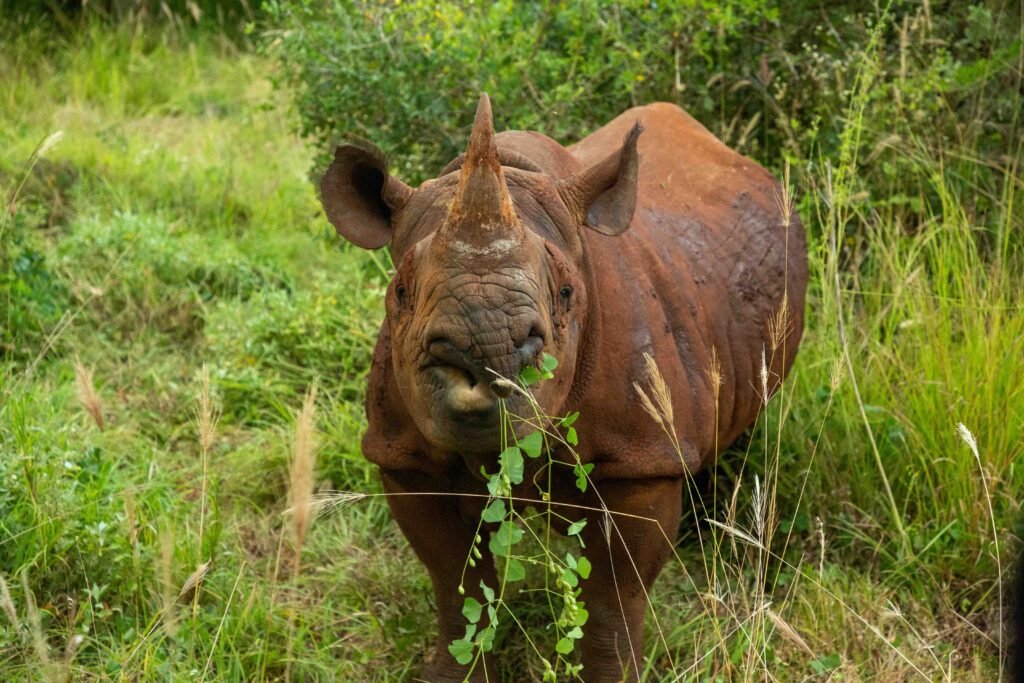
Mkomazi’s landscapes and wildlife
Mkomazi’s semi-arid environment supports wildlife adapted to dry conditions. Open savannah, scattered trees, rocky ground and distant mountain ranges create varied scenery across the park. The Pare and Usambara Mountains add depth to the horizon, and Mount Kilimanjaro may be visible when weather and visibility allow. The landscape is often more open and rugged than the heavily wooded parts of some other Tanzanian parks, making it interesting for photography and birdwatching.
Wildlife may include elephants, giraffes, buffalo, zebra, antelope and predators, although sightings are never guaranteed. Mkomazi is particularly noted for species associated with dry country, including fringe-eared oryx, gerenuk and lesser kudu. These animals have specialised feeding and water-use adaptations, and a knowledgeable guide can explain how they survive in a landscape where resources change with rainfall. Birdlife is another strength, with many species using the park’s open and scrub habitats.
The park’s conservation profile is an important reason to visit. The black rhino sanctuary supports protection and breeding work for a critically endangered species, while conservation programmes also focus on African wild dogs. These animals are not simply attractions; they are part of wider efforts to maintain viable populations and protect habitats. Visitors should follow the sanctuary’s instructions, keep noise low and understand that access may be more restricted than an ordinary game-drive area.
Visitors should also understand that a sanctuary is a protected conservation facility, not an opportunity for unrestricted contact with wildlife. Staff may limit where guests can stand, how long a visit lasts and which photographs are permitted. Follow those instructions even when they differ from what you have experienced at other parks. The purpose of the visit is to learn about protection and recovery, while allowing the animals to remain undisturbed.
Black rhino conservation and African wild dogs
Black rhinos are among Africa’s most threatened large mammals, and their protection requires secure habitat, anti-poaching work, monitoring and careful management. Mkomazi’s sanctuary provides a protected setting for conservation activities and may offer an opportunity to learn about the work being done. The precise visitor experience can depend on park arrangements and operating conditions, so it is important to confirm whether a sanctuary visit is available on your dates rather than assuming it is included in every park entry.
African wild dogs are highly social predators that live in packs and travel over large territories. They are known for coordinated hunting and strong social bonds, but they are difficult to see because they move widely and may be absent from a particular area during a short visit. Mkomazi is recognised for supporting wild dog conservation, yet no operator can guarantee a sighting. A patient game drive and a flexible route offer a better approach than focusing on a single species alone.
Conservation visits should be treated as educational experiences. Do not ask staff to move animals, approach enclosures or change normal procedures for a photograph. Listen to the explanations provided by rangers and respect any limits on time, distance or group size. Understanding the work behind a sanctuary can make the visit meaningful even when a particular animal remains out of view.
Any visit to the rhino sanctuary should be arranged through the park’s authorised process. Ask what the current visitor programme includes, whether advance booking is required and how long to allow. Rules may limit group size, vehicle access or photography, and those requirements protect the animals and staff. Do not assume that a normal game-drive ticket automatically includes a sanctuary visit. Confirm the total cost and timing before setting out from your lodge.
Best time to visit and activities
Dry periods often make game drives easier because vegetation is less dense and some animals concentrate around reliable water sources. The exact best months depend on rainfall, road conditions and the wildlife interest of the visitor. During greener periods, the scenery can be attractive and birdwatching may be rewarding, but some tracks can become more challenging. Check current park information before travel, especially if your route includes several destinations in the same region.
Game drives are the main activity, and birdwatching can add interest for visitors who enjoy identifying species and observing different habitats. Guided walks may be offered under authorised conditions, but they should only be arranged through park-approved guides and procedures. A visit to the rhino sanctuary, where available, provides a conservation focus that distinguishes Mkomazi from a standard game-drive itinerary. Ask how much time is needed for each activity and whether it must be booked in advance.
Mkomazi can work as a short safari from the Moshi, Arusha or Tanga area, depending on the route and available accommodation. Travellers who want to explore the park properly should allow enough time for transfers and at least one full day of activities. If combining it with other parks, avoid making every day a long road transfer. A well-paced itinerary is more enjoyable and gives guides more time to respond to wildlife conditions.
Wild dogs are naturally wide-ranging, and even a park with an established conservation programme cannot promise that a pack will be visible during a particular visit. Guides may receive information about recent activity, but animal movements can change quickly. It is better to enjoy the wider wildlife experience and treat a wild dog sighting as a bonus. This approach also reduces pressure on guides to follow animals too closely or leave authorised routes.
Getting to Mkomazi and planning your stay
Mkomazi lies in northeastern Tanzania, with road access from towns in the Kilimanjaro, Tanga and Manyara regions depending on the gate and route used. Travel times vary with starting point, road condition and the part of the park being visited. Confirm the correct gate and meeting point with your accommodation or operator, because a map distance does not always reflect the time needed on local roads.
Accommodation options may be found in or near the park, as well as in surrounding towns. Ask whether the property is inside the protected area, what meal arrangements are included, whether it supplies a safari vehicle and how the sanctuary visit is organised. If you are staying outside the park, calculate the time needed to enter and reach the game-drive areas. Early starts can make a meaningful difference to how much time remains for wildlife viewing.
Pack sun protection, a hat, binoculars, comfortable closed shoes and a light warm layer for early mornings. Carry water in a reusable bottle where permitted, and keep to park rules about waste and wildlife distance. Mkomazi rewards visitors who appreciate its dry-country ecology and conservation work rather than expecting the same experience as the Serengeti. Tanzania Beauty Safaris can help combine Mkomazi with nearby destinations while keeping the route practical.
Mkomazi is especially rewarding when visitors approach it with an interest in ecology rather than a checklist of famous animals. Dry-country species have adaptations that are easy to overlook without explanation, and a guide can point out how browsing, grazing and water use differ across the park. Take time to observe the vegetation and the shape of the terrain as well as searching for mammals. The scenery itself is part of the experience, particularly when distant mountain ranges are clear.
Frequently asked questions
Where is Mkomazi National Park?
Mkomazi is in northeastern Tanzania near the Kenyan border, within the wider Tsavo-Mkomazi ecosystem.
Can visitors see black rhinos in Mkomazi?
The park has a rhino sanctuary, but access and viewing arrangements are controlled. Confirm availability with the park before travel.
Are African wild dogs found in Mkomazi?
Mkomazi supports wild dog conservation, but sightings are not guaranteed because packs move over large areas.
Can Mkomazi be visited from Arusha?
It may be possible by road as part of a longer northern or northeastern itinerary. The best route depends on the gate and accommodation.
Plan your Tanzania safari
A successful safari depends on matching the destination, season, accommodation and transport to the time available. Rather than rushing between distant parks, choose a route that allows you to experience each landscape properly. Tanzania Beauty Safaris can help compare options and organise a private itinerary with realistic transfer times and clear inclusions.
Mkomazi can be combined with other northeastern destinations, but the distances and road conditions should be checked carefully. Travellers may use it as part of a route involving Moshi, the Pare Mountains, Tanga or other northern parks. Ask the operator which gate will be used and whether accommodation is inside or outside the park. A route that looks straightforward on a regional map can involve a different journey time depending on the entrance and the camp’s position.