A first visit to the Serengeti can be difficult to plan because the name describes an enormous ecosystem rather than one compact wildlife area. The park covers broad plains, rocky kopjes, river valleys, woodland and seasonal grasslands, and the experience changes as the route moves from the centre towards the south, west or north. The Great Migration adds another layer of complexity because the herds move in response to rainfall and grazing conditions. Choosing where to stay is therefore just as important as choosing which month to travel.
For many first-time visitors, Central Serengeti around Seronera offers a balanced introduction. Resident wildlife can be found throughout the year, and the region has a variety of habitats that support lions, leopards, cheetahs, elephants, giraffes and many grazing species. Travellers whose main interest is a particular migration stage may be better served by the southern plains during calving season or the northern Serengeti during the period when herds use the Mara River region. The right choice depends on dates, available nights and how much time can be devoted to the park.
A good first safari should not try to cover every corner of the Serengeti in a few days. Long transfers between distant regions can reduce time for game drives and make the itinerary tiring. Tanzania Beauty Safaris recommends starting with the wildlife experience that matters most, then choosing a route and accommodation that make it practical. This guide explains the main regions, what to expect from wildlife viewing and how to plan a first visit with realistic travel times.
Choosing the Right Serengeti Region for Your First Visit
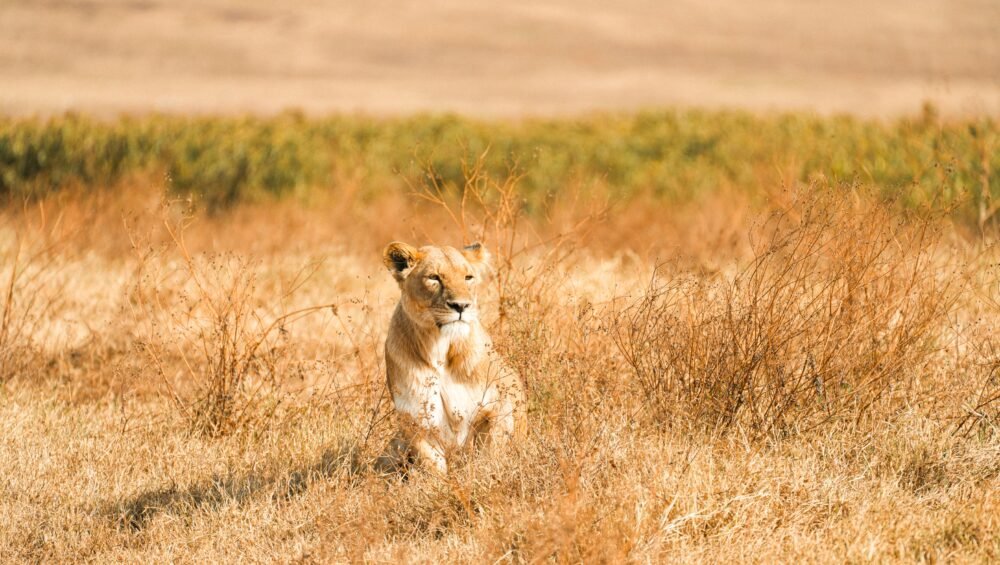
Central Serengeti is often a practical starting point because the Seronera area combines open grassland, riverine woodland and rocky kopjes. These habitats support resident wildlife, so a safari does not depend entirely on the Great Migration being in the immediate area. Lions are regularly encountered in the wider region, while leopards may use trees along river courses and cheetahs favour more open ground. Elephants, giraffes, buffalo, zebra and several antelope species add to the variety. The region is also a useful base for visitors who want a first introduction to the scale and character of the Serengeti.
The southern plains and Ndutu area are particularly important during the calving season, generally around January and February. The short-grass plains provide seasonal grazing for migrating wildebeest, and large numbers of calves are born over a relatively concentrated period. This brings opportunities to observe herds, young animals and predators, although a birth or hunt cannot be guaranteed. Travellers choosing this region should plan around the seasonal pattern and confirm where their camp is located, since the wider Ndutu area sits around the boundary of Serengeti National Park and the Ngorongoro Conservation Area.
Northern Serengeti is associated with the Mara River and the migration’s northern movement, often during the broad period from July to October. The region has rolling hills, riverine vegetation and open country, with resident wildlife as well as migrating herds at the appropriate time. River crossings are unpredictable; animals may gather, wait or cross at a different location. A first-time visitor whose main aim is to see this part of the migration should allow several nights in the north rather than assuming a single afternoon will be enough. The western corridor around the Grumeti River is another distinct region, sometimes relevant to the migration’s westward movement earlier in the year.
The regions are not interchangeable, and the distances between them are substantial. A route that includes central, northern and southern Serengeti in a short stay may spend too much time transferring between camps. For a first safari, two or three nights in one well-chosen region can be more rewarding than moving every day. If you have a longer holiday, combining regions can add variety, but the order should follow the season and the travel connections. The best itinerary is not the one with the most place names; it is the one that gives enough time to experience each area.
Wildlife, Game Drives and What a First-Time Visitor Should Expect
The Serengeti is famous for its large mammals, but the quality of a game drive comes from understanding how animals use the landscape. Lions may rest in shade during the heat of the day and become more active in cooler hours. Leopards are often associated with riverine trees and thicker cover, where their spotted coats can make them difficult to detect. Cheetahs favour open country where they can scan for prey, although they may also rest for long periods. A guide reads tracks, alarm calls, bird activity and the behaviour of other animals to decide where to explore, but no method can guarantee a sighting.
The Great Migration is a major part of the Serengeti story, but it should not overshadow the resident wildlife. Wildebeest and zebra move through different regions during the year, while elephants, giraffes, buffalo, antelope and predators remain important parts of the ecosystem. The herds can be spread across a wide area, and their location changes with rainfall and grazing. If the migration is central to your trip, choose a region that matches the expected seasonal movement and allow enough nights to adapt to local conditions. If your interest is a general wildlife safari, Central Serengeti may provide a broader year-round introduction.
Game drives usually take place in the early morning and later afternoon, when temperatures are often more comfortable and animals may be active. A full-day drive can be arranged in some itineraries, with a picnic lunch carried from camp, but the choice depends on the region, camp location and the traveller’s pace. Long days in the vehicle can be rewarding for photographers and wildlife enthusiasts, but they are not necessary for everyone. Families or visitors who prefer a slower rhythm may enjoy returning to camp for lunch and resting before an afternoon drive.
It is worth approaching wildlife viewing with patience. A herd may be visible across a plain without moving closer, a predator may be resting in long grass, or a sighting may develop over time as animals interact. The guide’s role is to provide context and position the vehicle responsibly, not to make wildlife perform. Keep a respectful distance, avoid asking the driver to leave authorised tracks and remember that a quieter drive can still teach you a great deal about the ecosystem. For a first visit, learning how the landscape works is often as memorable as seeing a particular species.
How Many Days to Spend in the Serengeti and How to Travel Between Regions
The number of nights you need depends on the region and the route. Two nights in Central Serengeti can provide a useful introduction, while three nights allow more time for morning and afternoon game drives without feeling rushed. A migration-focused stay in the north or south is usually stronger with at least three nights because herds move and sightings vary across the area. Travellers combining two regions should allow enough time for the transfer and avoid treating a long drive as if it were a full day of game viewing. More nights do not guarantee a specific sighting, but they create more opportunities to explore.
Road travel is a common way to reach the Serengeti from Arusha, Ngorongoro or another northern circuit destination. The journey can be scenic and may include wildlife viewing along the way, but distances are long and road conditions vary. A transfer from the Ngorongoro area to Central Serengeti, for example, can take a substantial part of the day depending on the route, stops and park procedures. Travellers should ask how much time is allocated to driving and whether the itinerary includes game viewing en route or a dedicated afternoon drive after arrival.
Fly-in safaris can reduce travel time and are useful for visitors with limited days or those travelling to a distant region such as the north. Flights operate to specific airstrips, and the correct one depends on the camp location and route. Baggage allowances are often more restrictive than on international flights, and soft-sided bags may be required. The camp or operator usually arranges the airstrip transfer, but travellers should confirm the schedule, transfer time and what happens if a flight is delayed. A flight saves road time but does not remove the need to plan the final connection to camp.
A first Serengeti safari is often combined with Ngorongoro Crater and sometimes Tarangire or Lake Manyara. These parks offer different landscapes and can make a well-rounded northern Tanzania journey. The route should be designed around the number of days available. If the Serengeti is the main priority, avoid adding too many destinations simply to increase the park count. A thoughtful itinerary leaves enough time for the Serengeti itself and uses other parks where they add a genuinely different experience.
Accommodation, Costs and Practical Preparation for a First Safari
Serengeti accommodation includes permanent lodges, tented camps and seasonal mobile camps. The most important consideration is often location rather than the category of property alone. A camp near Seronera gives access to central game-drive areas, while a camp in the north or south is better suited to the wildlife patterns of those regions during the relevant season. Mobile camps may move to follow seasonal concentrations, while permanent lodges remain in one place. Travellers should ask for the camp’s exact location and nearest airstrip, not rely only on a general description such as ‘Serengeti camp’.
Safari costs vary with accommodation, travel season, group size, vehicle arrangements, park fees and whether domestic flights are included. Peak migration periods and camps in sought-after locations can be more expensive, while the green season may offer different rates and availability. A lower quotation is not automatically better value if it uses accommodation far from the intended wildlife area or excludes significant costs. Ask whether the price includes park and concession fees, meals, transfers, drinking water, flights and airport connections. Clear inclusions make it possible to compare like with like.
Packing for the Serengeti is straightforward when clothing is practical and adaptable. Neutral-coloured layers work well for game drives, with a warm jacket or fleece for early mornings and a hat and sun protection for the middle of the day. Binoculars are useful for animals at a distance, and a camera with a suitable zoom can help, although a phone can still capture the atmosphere. If flying between parks, check baggage limits before packing. Soft-sided bags are commonly required on smaller aircraft, and excess luggage may not be accepted without prior arrangement.
Before travelling, share any dietary requirements, mobility considerations, medical needs or special interests with the safari operator. Families may need child seats or a more flexible daily schedule, while photographers may want extra room for equipment. Ask about the vehicle, charging points, seating and whether the safari is private. Tanzania Beauty Safaris uses these details to shape a practical route and to explain what each day involves. Good preparation does not remove the unpredictability of wildlife, but it makes the journey more comfortable and allows guests to focus on the experience.
Frequently Asked Questions About a First Serengeti Safari
How many days are enough for a first Serengeti safari?
Three nights in one suitable region is a useful starting point for many first-time visitors. Two nights can work for a short trip, while longer stays allow more time for wildlife viewing or combining regions.
Which Serengeti region is best for first-time visitors?
Central Serengeti is often a versatile choice because of its resident wildlife and range of habitats. The best region changes if your main interest is the Ndutu calving season or the northern Mara River migration.
Can I see the Great Migration on my first safari?
You may, if your travel dates and chosen region align with the herds’ seasonal movement. The migration moves in response to rainfall, so no operator can guarantee the exact location or a river crossing.
Is it better to drive or fly to the Serengeti?
Road travel can suit longer northern circuit journeys and includes changing scenery and wildlife along the way. Flying saves time and can be useful for short trips or distant regions, but adds cost and baggage restrictions.
What should I pack for a Serengeti safari?
Pack comfortable neutral-coloured clothing, warm layers for early starts, sun protection, binoculars, personal medication and camera equipment if desired. Check airline baggage rules if your itinerary includes small aircraft.
First-time visitors should also leave room for simple pleasures that are easy to overlook when planning around famous sightings: watching elephants move across the plains, listening to birds around camp, noticing how the light changes over the kopjes or learning to recognise tracks with a guide. These moments help build a fuller understanding of the Serengeti. A well-paced safari is not measured only by the number of predators seen, but by the quality of time spent in the landscape.
Plan Your First Serengeti Safari with Tanzania Beauty Safaris
A first Serengeti safari should be planned around the experience you want rather than a list of places to cover. The central region offers a varied introduction and resident wildlife, the south is important during the calving period, and the north is associated with the Mara River migration. Each region has its own character, and the right choice depends on the month, number of nights and route. Taking time to understand these differences makes it easier to choose accommodation and avoid unnecessary transfers.
Tanzania Beauty Safaris can help you plan a first visit from Arusha, Kilimanjaro or Zanzibar, with road and fly-in options depending on the itinerary. We can recommend a region, select accommodation in a practical location and explain how the Serengeti fits with Ngorongoro, Tarangire or other northern circuit destinations. Share your travel dates, group size, preferred comfort level and main wildlife interests so that we can prepare a realistic proposal.
If you are unsure where to begin, tell us how many days you have for safari and which month you expect to travel. We can then compare the most suitable regions and explain the advantages and limitations of each option. Wildlife remains unpredictable, but choosing the right area and allowing enough time gives a first Serengeti safari a strong foundation.
If this is your first safari in Tanzania, it is helpful to tell us whether the Serengeti is your main priority or one part of a wider holiday. That distinction affects whether we recommend flying directly into the park, travelling by road through the northern circuit or combining a shorter Serengeti stay with Ngorongoro. We can also explain the difference between a private safari and a shared arrangement, and how those choices affect the pace and flexibility of your days.